
How GPR Helps Identify Underground Utilities Without Excavation: A Complete Guide for South African Sites
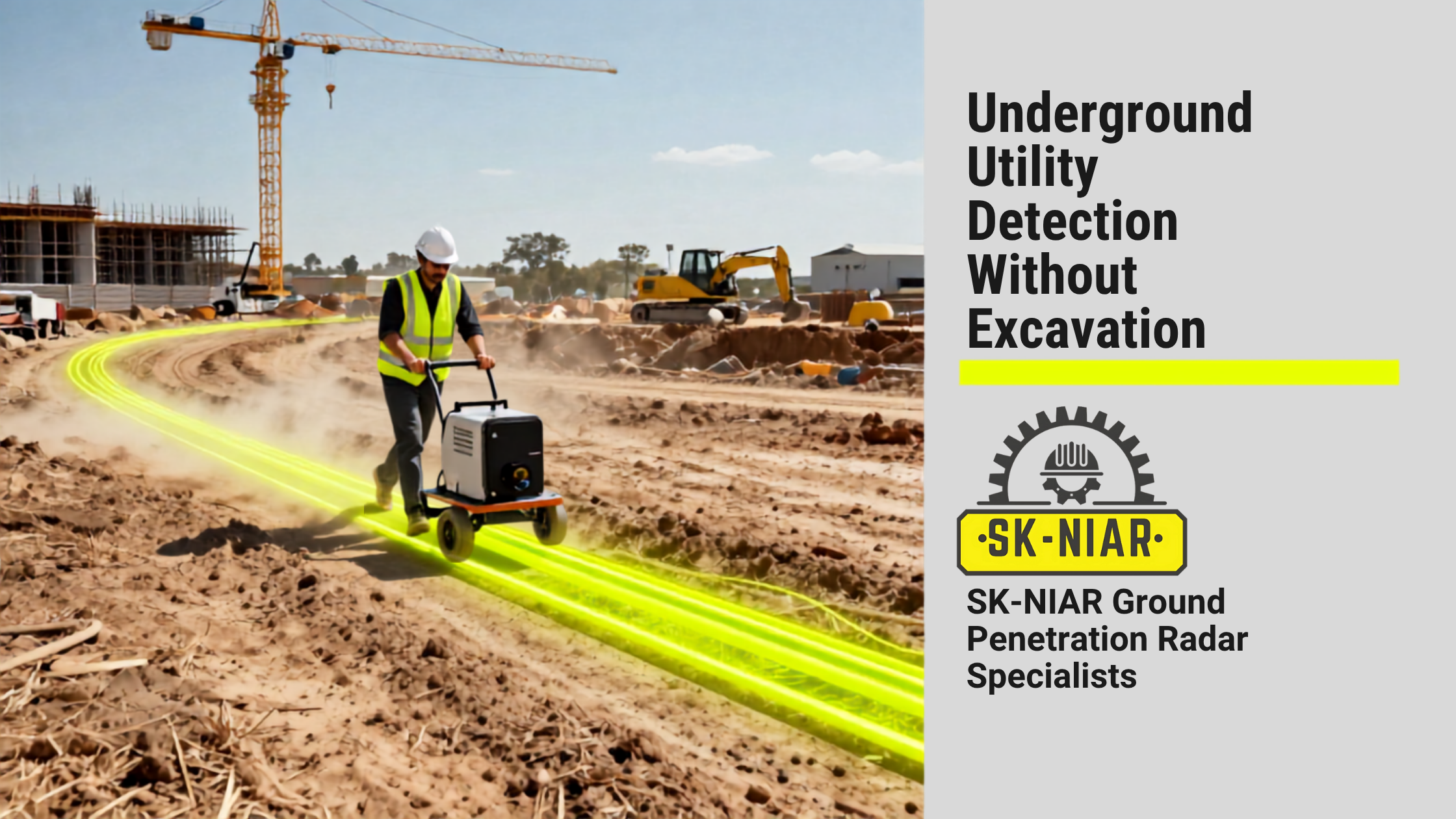
Ground Penetration Radar (GPR) has become one of the most reliable and non‑destructive methods for detecting underground utilities in South Africa. Whether you’re working on a construction site, municipal project, engineering development, or industrial facility, GPR provides fast and accurate subsurface imaging — without breaking the ground.
What Makes GPR So Effective?
GPR uses electromagnetic waves to scan beneath the surface and identify changes in material, density, and structure. This allows technicians to detect:
- Water pipes
- Electrical cables
- Fibre optic lines
- Sewer and stormwater systems
- Concrete structures
- Voids and cavities
- Buried foundations
- Underground tanks
View our full list of GPR services: SK‑NIAR Services
Why Non‑Destructive Utility Detection Matters
Traditional methods often require digging, drilling, or exposing the ground — which increases risk, cost, and time. GPR eliminates these issues by providing accurate imaging without disturbing the surface.
This is especially important in South Africa where many underground utilities are undocumented or outdated.
How GPR Prevents Utility Strikes
Utility strikes can cause:
- Project delays
- Repair costs
- Municipal penalties
- Safety hazards
- Service outages
GPR helps avoid these risks by providing clear subsurface data before excavation begins.
Where SK‑NIAR Provides GPR Services
SK‑NIAR operates across all 9 provinces, offering fast deployment and advanced GPR scanning for construction, engineering, municipal, and industrial projects.
View our nationwide coverage: SK‑NIAR Service Areas
Common Questions About GPR
Visit our FAQ page for answers to common GPR questions: SK‑NIAR FAQ
Need Underground Utility Detection?
Contact SK‑NIAR today for fast, accurate Ground Penetration Radar services anywhere in South Africa.
 WhatsApp: 068 533 1264